
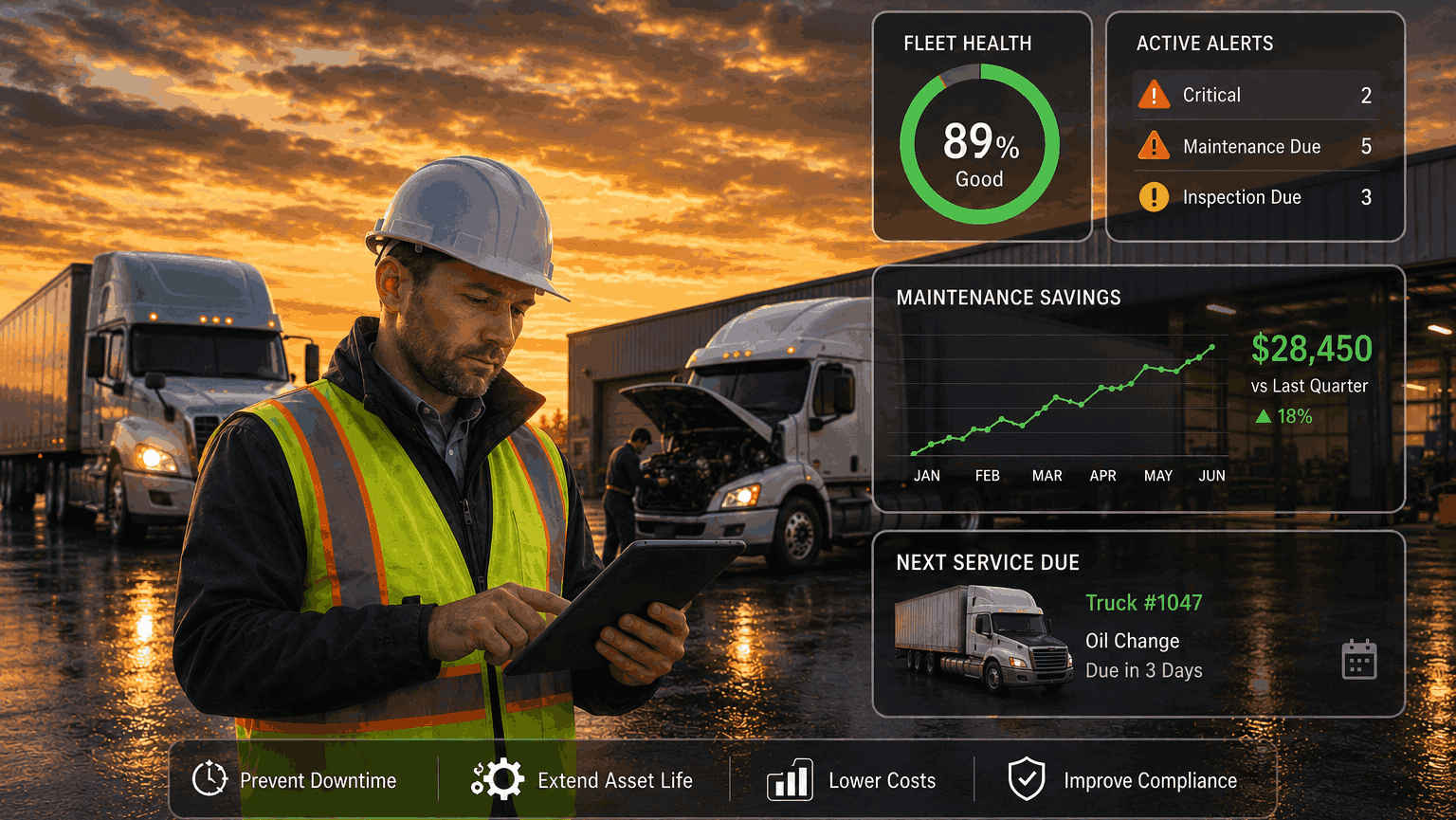
Evaluating fleet management software in 2026? Here’s what actually makes a measurable difference — based on real conversations with 100+ fleet owners, not a marketing checklist.
■ Key Takeaways

Why Most Fleets Struggle: Fragmentation
10 Features That Make a Real Difference
|
📁 01 · Data Centralized Fleet Data Management Impact: Reliable data makes every downstream decision faster and more accurate.
|
🔗 02 · Workflow Job & Trip End-to-End Workflow Impact: Every completed job is tracked and billed without manual hand-offs.
|
|
📈 03 · Profitability Job-Level Profitability Tracking Impact: Removes unprofitable routes and gives pricing data that actually reflects costs.
|
🔧 04 · Maintenance Preventive Maintenance & Work Orders Impact: Reduces breakdowns. Reactive repairs cost 3x more than scheduled servicing.
|
|
📋 05 · Compliance Document & Compliance Management Impact: Expired documents = grounded vehicles = lost revenue. Alerts prevent this.
|
📡 06 · Visibility Real-Time Fleet Visibility Impact: Tracking tied to live jobs improves coordination, not just location awareness.
|
|
🚚 07 · Assets Mixed Fleet & Asset Management Impact: Owned assets, hired vehicles, and equipment — all managed in one place.
|
💰 08 · Invoicing Automated Invoicing & Financial Tracking Impact: No revenue leaks. Every charge captured automatically from the executed job.
|
|
👤 09 · Drivers Driver & Workforce Management Impact: Right driver, right vehicle, right certification — matched automatically.
|
📊 10 · Analytics Analytics, Reports & Decision Insights Impact: Turns fleet data into decisions — cost trends, utilization, profitability at a glance.
|

The Connected Job Workflow
Fragmentation between quotation, execution, and invoicing is the #1 cause of missed revenue.
| Q Quotation | → | SO Sales Order | → | JE Job Execution | → | INV Invoicing | → | P&L Profitability |
Reactive vs Preventive Maintenance
Emergency repairs cost 3x more than planned servicing.
What the Numbers Say
Which Features Drive the Most Impact?
Ranked by measurable difference to daily operations across 100+ fleet owners:
| Preventive Maintenance | 96% |
| Compliance & Document Management | 93% |
| Job-Level Profitability Tracking | 91% |
| Automated Invoicing | 88% |
| Real-Time Fleet Visibility | 85% |
| Centralized Data Management | 82% |
| Analytics & Decision Insights | 79% |
Frequently Asked Questions
What is fleet management software and what does it do?
A platform that centralizes vehicles, drivers, jobs, compliance, maintenance, and financials in one place — going far beyond GPS tracking to offer end-to-end workflow automation and job-level profitability.
How does fleet management software reduce operational costs?
Preventive maintenance cuts emergency repair costs (3x more expensive). Automated invoicing stops revenue leakage. Profitability tracking removes unprofitable routes. Research shows 20–28% maintenance savings and 3.2x ROI within 18 months.
How does preventive maintenance reduce vehicle downtime?
By scheduling servicing on mileage or time intervals — not waiting for failure. The system alerts before service is due, generates work orders, and logs costs per vehicle. Fleets implementing this see 25–40% less unplanned downtime.
Is this software suitable for small and mid-sized transport companies?
Yes — smaller fleets often see the highest ROI because they’re most exposed to hidden costs from manual processes. The key is choosing a platform that scales without adding unnecessary complexity.
What should I look for in compliance management features?
Centralized document storage, automated expiry alerts, and system restrictions that block non-compliant vehicles from job assignment. Compliance built into daily workflows — not a separate checklist — is far more effective.
Final Thought
The difference isn’t how many features a system offers — it’s how well they support real operations.
This is the shift TransportSimple is built to support — helping fleet teams move from scattered, fragmented processes to a reliable, structured way of managing operations end-to-end.
🚙 About This Page
This page is created by the TransportSimple team. The insights shared here come from real conversations with fleet owners, transport managers, and drivers who deal with daily maintenance challenges, recurring breakdowns, and operational pressure. Over time, we’ve spoken with 100+ fleet owners across different countries and fleet sizes — and one thing is consistent: maintenance problems repeat everywhere when structure is missing.
These blogs are written by observing real-world patterns: where maintenance slips, where costs rise silently, and how disciplined fleets manage growth without chaos. The goal is not to provide theory, but to share practical thinking that works on the ground.



Leave a Reply