

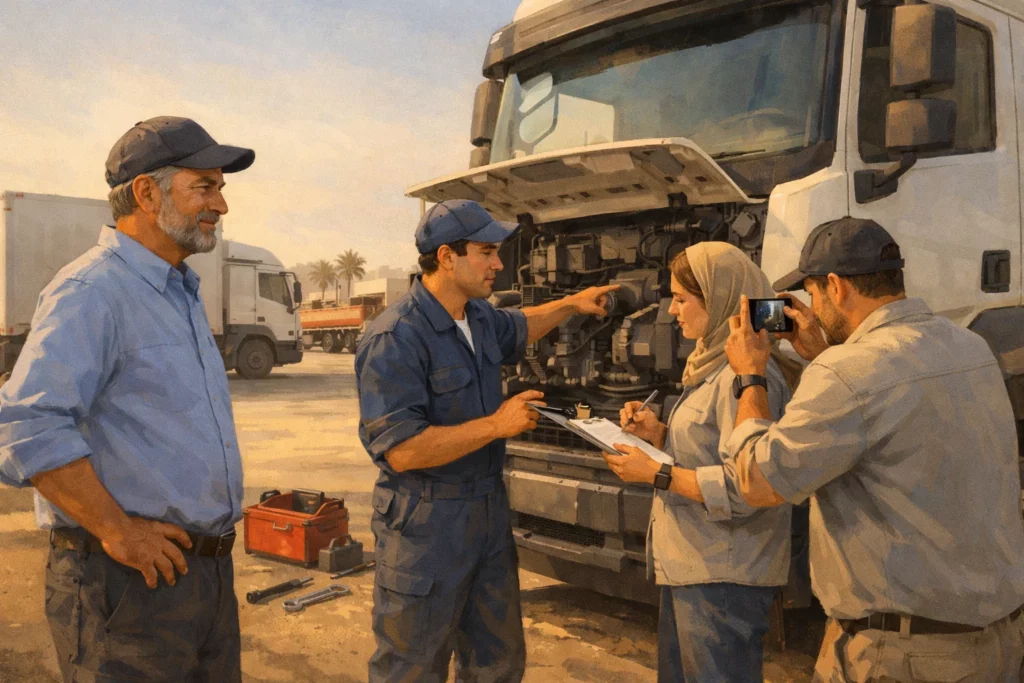
What a proper daily pre-trip inspection looks like?
A daily pre-trip inspection takes only a few minutes but saves hours of breakdown time later.
Exterior walk-around
Driver checks:
- Body damage or dents
- Glass cracks
- Mirror position
- Number plate visibility
Lights and signals
Driver checks:
- Headlights
- Brake lights
- Indicators
- Hazard lights
Tyres and wheel
Driver checks:
- Tyre condition
- Air pressure (visual)
- Cuts or bulges
- Wheel nuts
Under the vehicle
Driver checks:
- Oil, fuel, coolant leaks
- Hanging pipes or damage
Inside the cabin
Driver checks:
- Seatbelt
- Warning lights
- Horn and wipers
- Safety items
When this checklist is followed daily, breakdowns reduce automatically.
This is where many fleets start using a safety inspection app or fleet app to guide drivers step by step and prevent missed checks.
End-of-day inspection is equally important
Many problems don’t appear in the morning. They happen during the trip.
End-of-day inspection helps drivers report:
- New noise or vibration
- Brake or steering issues
- Warning lights during the trip
- Damage from road or weather
This protects the next driver and gives maintenance teams time to plan repairs. Fleets that skip end-of-day inspection usually face the same problem again the next day.
Why photos matter more than words
Written inspection tells only part of the story. Photos show the real condition of the vehicle.
Photo capture during inspection:
- Confirms real damage
- Avoids driver–manager arguments
- Helps faster repair decisions
- Improves accountability
This is why many fleets now use a safety reports inspection app instead of paper forms. Paper checklists cannot provide this level of clarity.

Manual inspection vs digital inspection (simple comparison)
Manual / Paper Inspection
- Often rushed
- Hard to read
- No photo proof
- Easy to lose
- Difficult to track history
Digital Inspection using Fleet Management Software
- Step-by-step checklist
- Photos attached
- Easy for drivers
- Instant visibility for managers
- Full inspection history
Who is responsible for inspection?
Driver responsibilities
- Perform inspection honestly
- Report problems immediately
- Capture photos
- Do not drive unsafe vehicles
Fleet manager responsibilities
- Set inspection rules
- Review inspection reports daily
- Act on critical issues
- Track repeated problems
When both use a reliable fleet management software, inspection becomes a safety system, not paperwork.
The real benefit of fixing vehicles early
Fleets that inspect vehicles daily see:
- Fewer roadside breakdowns
- Lower emergency repair costs
- Better vehicle availability
- Less stress for owners
Inspection is not extra work. Inspection is avoiding emergency work.
Final message for fleet owners
The most profitable fleets don’t fix vehicles after breakdown. They fix them before breakdown happens.
That habit naturally pushes fleets towards better structure, better safety, and better control. Over time, the need for a strong fleet inspection software and complete fleet management system becomes obvious.
Not because someone is selling it.
Because the business cannot run smoothly without it.
About this page
This page is created by the TransportSimple team.
The insights shared here come from real conversations with fleet owners, transport managers, and drivers who deal with daily challenges like breakdowns, missed inspections, and operational pressure. Over time, we’ve spoken with 100+ fleet owners across different countries and fleet sizes, and one thing is clear the problems may look small at first, but they repeat everywhere.
These blogs are written by observing patterns from those real experiences: where inspections get skipped, where issues go unnoticed, and what disciplined fleets do differently to stay in control. The aim is not to give theory, but to share practical thinking that actually works on the ground.
This same learning process shapes how TransportSimple is built by listening closely to fleet teams and quietly supporting better inspection, maintenance, and control without adding complexity.
At the end of the day, these blogs are written with a clear purpose: to help fleet owners reduce daily firefighting and build operations that are stable, organised, and easier to manage – by recognising issues early and resolving them before they affect safety, uptime, or business continuity.


Leave a Reply