
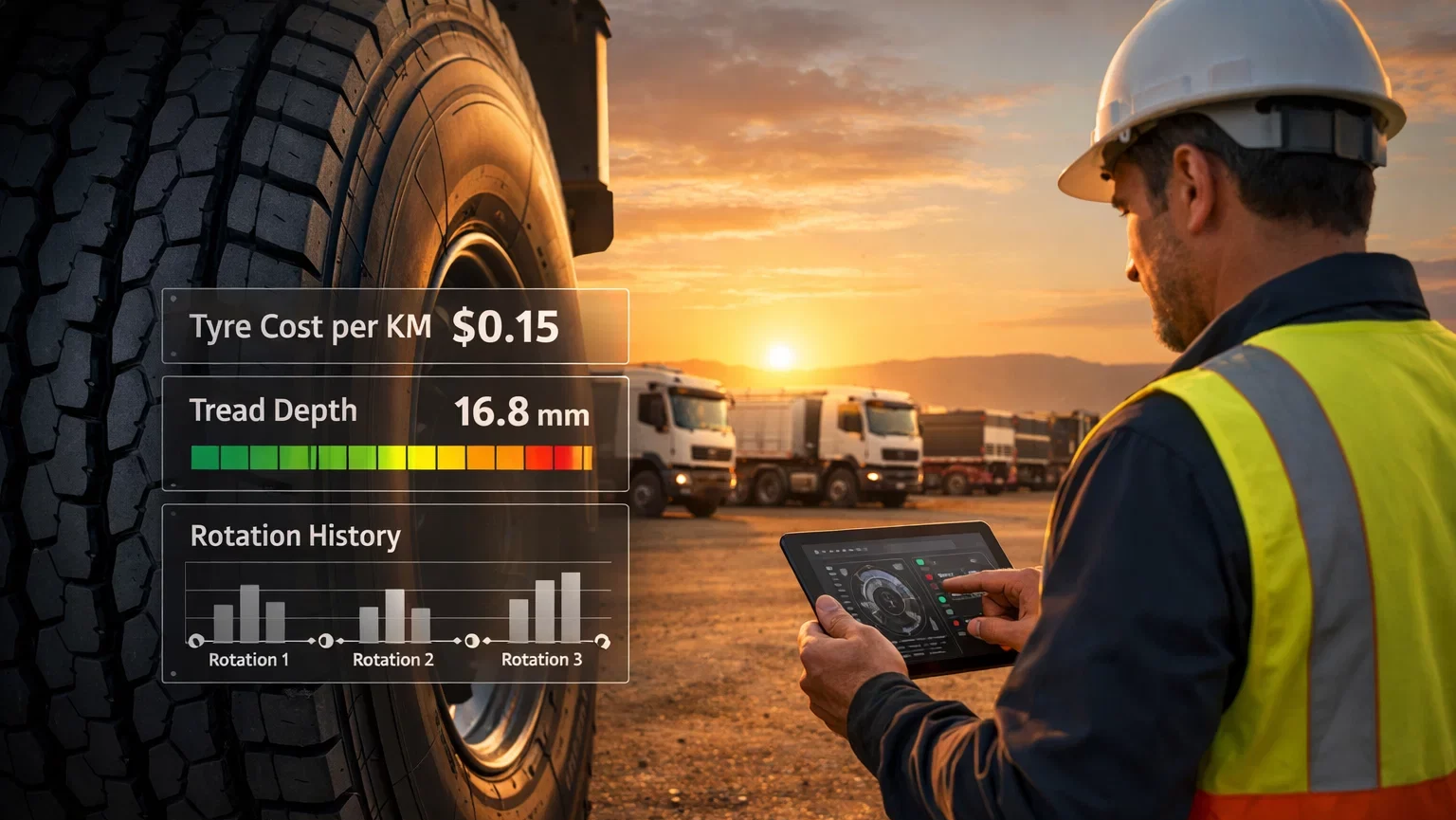
Tyres are not consumables. They are operational assets.
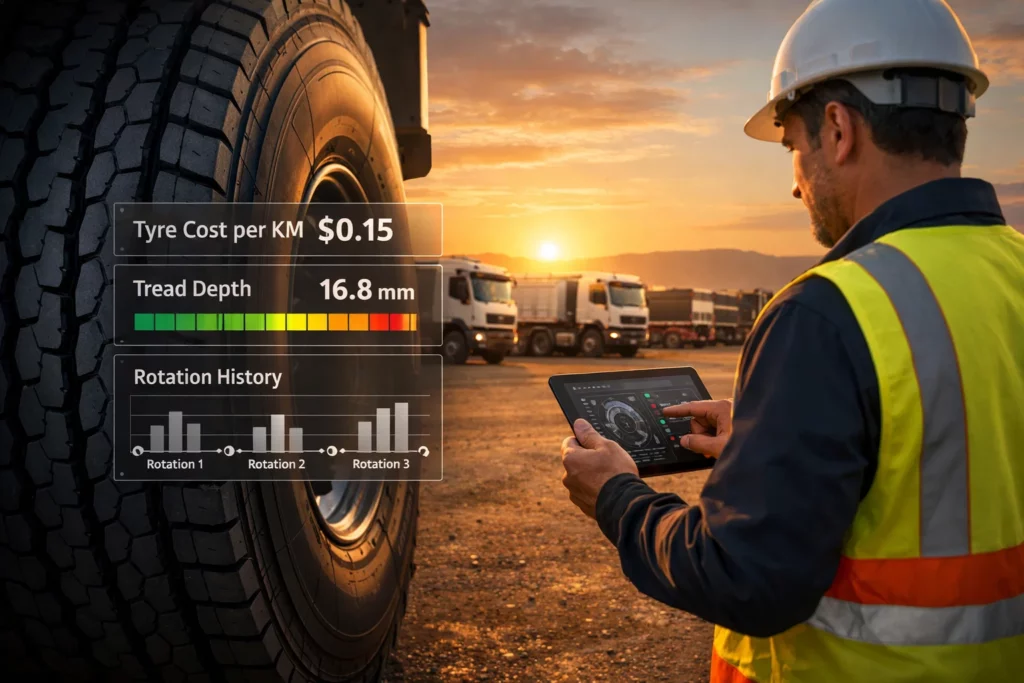
In most fleets, tyres represent 15–20% of total operating cost – second only to fuel. Yet in many transport companies, tyre management still happens manually or reactively.
No structured tyre tracking system.
No rotation tracking.
No cost-per-km visibility.
No integration with fleet maintenance software.
That is where costs begin to leak.
Fleet tyre management, when structured correctly, becomes part of your larger Fleet Management software strategy – not just a workshop activity.
Why Tyre Management Directly Impacts Fleet Profitability
Every fleet owner focuses on:
- Fuel management system optimization
- Driver performance tracking
- Preventive maintenance
- Fleet compliance software
- Fleet reporting software
But tyres silently affect:
- Fuel efficiency
- Vehicle stability
- Brake performance
- Downtime risk
- Maintenance frequency
- Route expense tracking
A poorly managed tyre lifecycle increases:
- Fuel consumption
- Breakdown frequency
- Workshop visits
- Emergency procurement costs
- Fleet downtime
And most importantly it inflates your fleet operational cost tracking numbers. Without tyre life monitoring, you are guessing not managing.
The 7 Pillars of Structured Fleet Tyre Management
Vehicle-Level Tyre Configuration (Structured Setup)
Every vehicle category behaves differently:
- Heavy vehicle maintenance needs (trucks & tippers)
- Crane fleet management load pressure
- Trailer axle distribution
- Mixed fleet management complexity
Tyre management software must allow:
- Vehicle-specific tyre structure
- Axle-level configuration
- Load-based classification
- Position mapping
Without structured setup, tyre tracking becomes impossible at scale.
Position-Based Tyre Tracking System
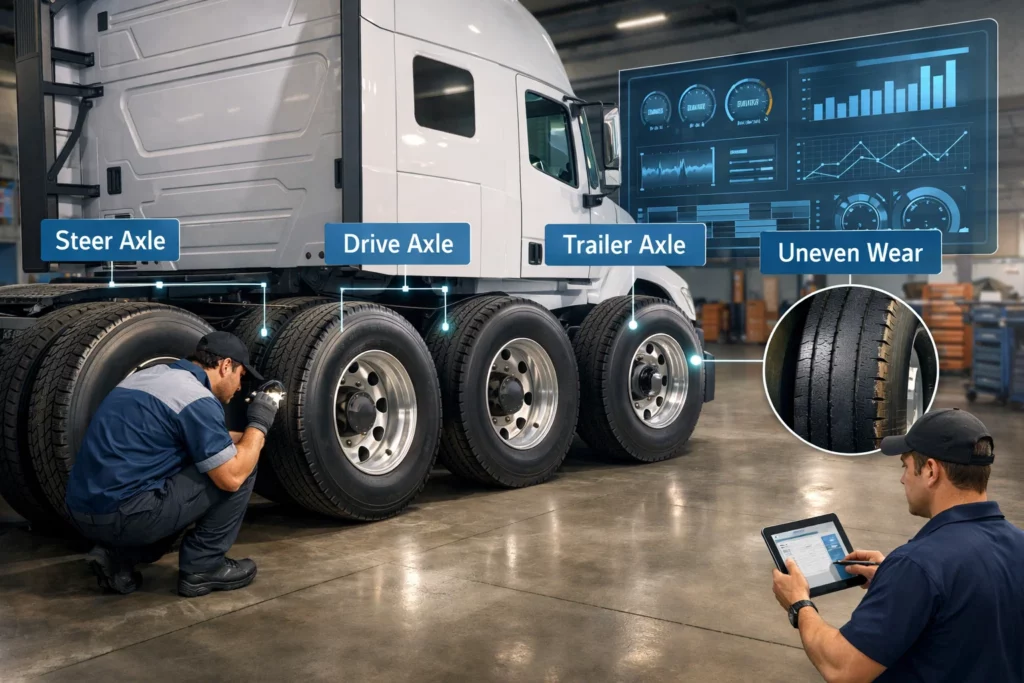
Tyres do not wear evenly.
- Steer tyres wear differently than drive tyres
- Trailer tyres behave differently on long-haul routes
- Overloaded vehicles show faster outer-edge wear
A true tyre tracking system records:
- Installation date
- Axle position
- Side placement
- Rotation history
- Removal reason
This turns your tyre program into diagnostic intelligence. It also supports fleet downtime reduction by identifying mechanical issues early.
Tyre Rotation Tracking & Preventive Maintenance Integration
Tyre rotation should not depend on memory. It must be part of your preventive maintenance schedule. Integrated maintenance reminder systems ensure:
- Rotation every X km
- Alignment checks at defined intervals
- Inspection logs recorded digitally
- Digital work orders created automatically
When tyre rotation tracking is connected to fleet maintenance software, tyre life improves by 10–30%. This directly reduces replacement frequency.
Tyre Life Monitoring & Failure Pattern Analysis
Without tyre life monitoring, you cannot answer:
- Which vehicles consume tyres faster?
- Which routes damage tyres most?
- Which drivers cause abnormal wear?
- Which vendor performs better long-term?
When connected to fleet reporting software and fleet analytics dashboards, you gain:
- Average tyre lifespan per vehicle
- Vendor comparison reports
- Seasonal wear trend analysis
- Driver misuse detection
This is where tyre management becomes fleet intelligence.
Spare Tyre & Parts Stock Managemen
Tyres are inventory. And inventory without control creates chaos.
Poor spare parts inventory management causes:
- Overstocked warehouse capital lock
- Emergency procurement
- Higher purchase cost
- Workshop delays
A proper spare parts inventory system should:
- Track tyre stock levels
- Trigger parts reorder level system alerts
- Connect tyre issuance to vehicles
- Log usage into workshop inventory software
- Sync with purchase order management
This transforms tyres from a workshop burden into structured asset tracking software.
Retreading & Replacement Optimization
Retreading reduces tyre cost by 30–50%. But timing matters.
Remove too early → wasted life
Remove too late → damaged casing
A structured tyre management software solution tracks:
- Tread depth history
- Removal reason codes
- Retread eligibility
- Total lifecycle runs
This ensures optimal replacement timing and controlled heavy vehicle maintenance budgeting.
Fleet-Level Analytics & Cost Visibility
The real power appears when tyre data connects with:
- Fleet maintenance software
- Transport management system
- Fleet P&L reporting
- Job profitability software
- Fleet finance automation
Now you can see:
- Tyre cost per vehicle
- Tyre cost per job
- Tyre cost per route
- Tyre impact on job profitability
- Total fleet cost reduction potential
When integrated correctly, tyre data becomes part of your transport profitability tool.
The Problem with Manual Tyre Tracking
In most transport companies, tyre data is scattered:
- Purchase invoices in accounting
- Rotation notes in workshop diaries
- Inventory in Excel
- Maintenance in another system
- Cost reporting somewhere else
This fragmentation kills visibility.
Competitors often focus only on GPS tracking or telematics integration.
But tyre lifecycle control requires operational structure – not just location tracking.
The Hidden Cost: Why “Purchase Price” Is the Wrong Metric
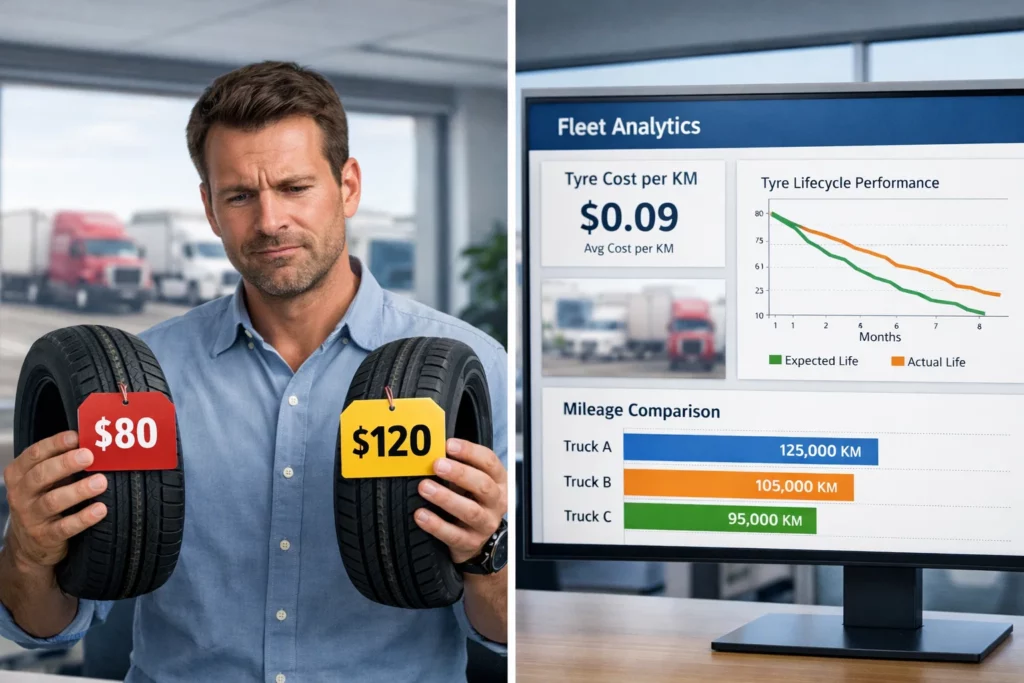
Many fleets choose tyres based on upfront price.
But purchase price alone does not reflect true performance. The more meaningful performance indicator is:
Tyre Cost Per KM = Total Tyre Cost ÷ Total Distance Covered
Two tyres may have different purchase prices, yet the one with the higher upfront cost may ultimately deliver better value if it runs longer, wears evenly, and reduces downtime risk.
Focusing only on invoice value hides what really matters – lifecycle efficiency.
This is where a structured cost-per-kilometer tracking approach becomes important.
When tyre data connects with:
- Vehicle mileage
- Route conditions
- Maintenance job cards
- Workshop service history
- Spare parts inventory systems
Procurement decisions shift from assumption to measurable performance.
Instead of selecting tyres based on price comparisons alone, fleets begin evaluating:
- Lifespan consistency
- Wear patterns
- Retread suitability
- Impact on fuel efficiency
- Effect on overall maintenance cycles
Tyres stop being treated as consumables and start being evaluated as performance assets. That shift from price-based buying to data-based decision making is what strengthens cost control over time.
Tyres as Strategic Assets – Not Consumables
When structured properly, tyre management delivers:
- Lower cost per km
- Reduced emergency breakdowns
- Improved vehicle uptime
- Better vendor negotiations
- Stronger fleet cost reduction
- Cleaner audit trail
- Smarter fleet digitalization
Tyres stop being unpredictable expenses.
They become measurable performance assets.
About this page
This page is created by the TransportSimple team.
The insights shared here come from real conversations with fleet owners, transport managers, and drivers who deal with daily maintenance challenges, recurring breakdowns, and operational pressure. Over time, we’ve spoken with 100+ fleet owners across different countries and fleet sizes, and one thing is consistent maintenance problems repeat everywhere when structure is missing.
These blogs are written by observing real-world patterns: where maintenance slips, where costs rise silently, and how disciplined fleets manage growth without chaos. The goal is not to provide theory, but to share practical thinking that works on the ground.
This same learning process shapes how TransportSimple is built by listening closely to fleet teams and supporting better maintenance control without adding complexity.
At the end of the day, these blogs are written with a clear purpose: to help fleet owners reduce daily firefighting and build operations that are stable, organised, and easier to manage by recognising maintenance issues early and resolving them before they affect uptime or business continuity.



Leave a Reply