
■ Key Takeaways
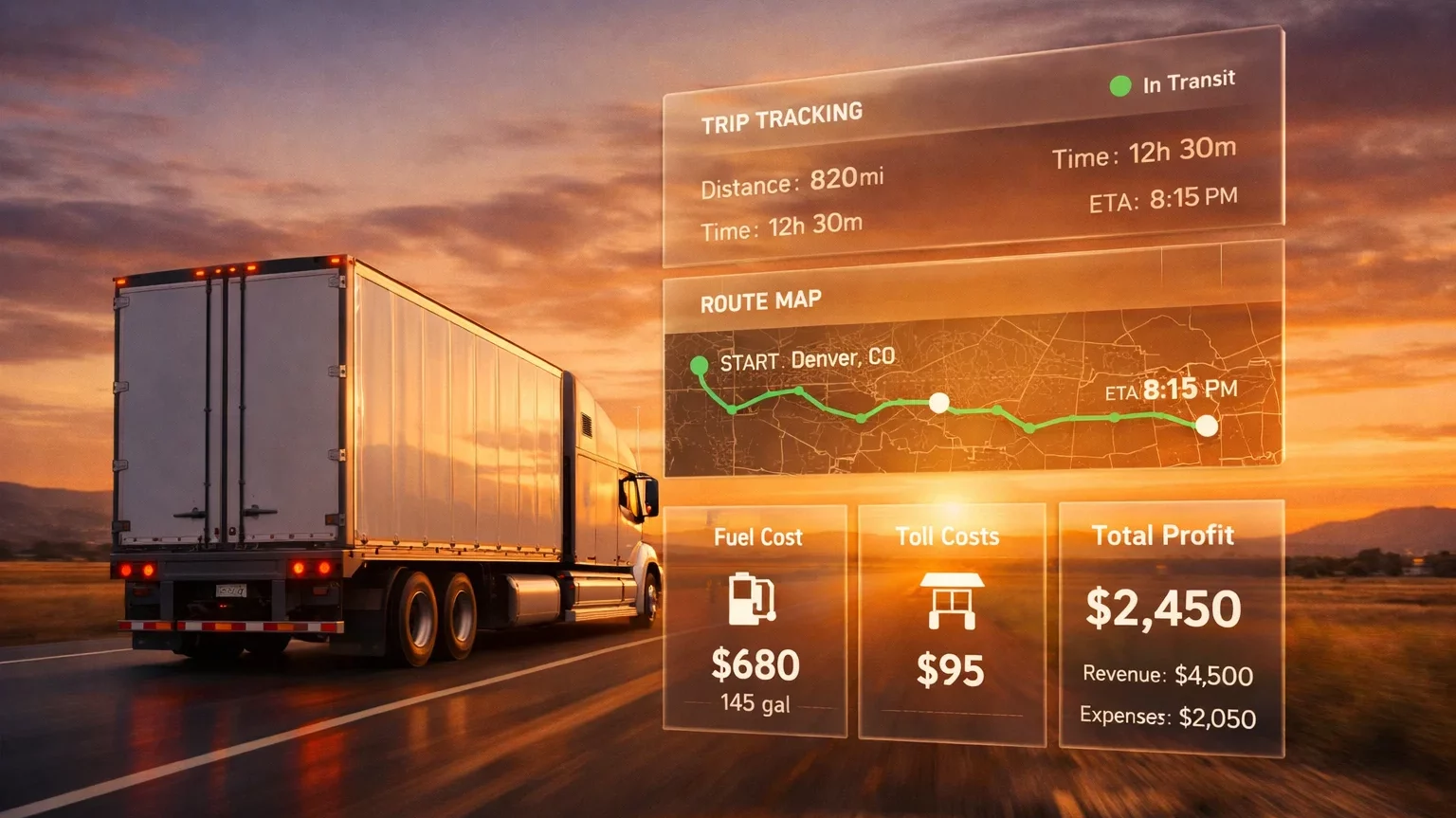
Every trip generates revenue. But every trip also generates costs.
Without trip management, those costs stay hidden — and margins quietly disappear.
■ The Visibility Gap Most Fleets Have
|
✖
Which trips are profitable?
Most fleets can’t answer this without digging through records
|
✖
What does each trip actually cost?
Fuel, tolls, advances — rarely tracked together
|
✖
Are driver expenses accurate?
Manual records make verification slow and error-prone
|
The True Cost of a Transport Trip
Most fleets calculate trip success based only on the freight amount. But a single trip carries multiple cost layers that eat directly into margins.
■ What’s Inside a Single Trip’s Cost
|
⛽
Fuel purchases
🚌
Toll payments
👨🕔
Driver allowances & advances
|
📦
Loading & unloading charges
🚗
Parking & waiting charges
🔧
Emergency repair expenses
|
⚠ Hidden Costs That Quietly Reduce Margins
A Structured Trip Management Workflow
Successful transport companies follow a defined process for every trip. When standardised, operations become easier to control and scale.
Digital Trip Sheets vs. Manual Records
Many fleets still rely on paper trip sheets or Excel files. The problems compound as fleet size grows.
|
✕ Paper / Excel Approach
Missing expense records
Calculation errors
Delayed trip reporting
Lost receipts
Slow billing processes
|
✓ Digital Trip Sheet System
All trip data in one place
Automatic cost calculations
Real-time trip visibility
Receipts and documents attached digitally
Instant billing on trip completion
|
👁 What Operations Teams Can See Instantly
|
🚶
Active trips
|
📅
Upcoming dispatches
|
✅
Completed deliveries
|
⏳
Delayed shipments
|
🚙
Vehicle availability
|
Route Expense Tracking Reveals Trip Profitability
Revenue alone does not determine whether a job is profitable. Route expense tracking connects every cost directly to the trip so you can calculate real profitability.
| What You Track | What You Learn | What You Can Do |
|---|---|---|
| Total trip cost | Real margin per job | Price routes correctly |
| Cost per route | Which routes cost more | Optimise or renegotiate |
| Expense patterns | Recurring cost drivers | Target reductions |
| High vs low margin routes | Where to prioritise volume | Focus on profitable jobs |
Tracking Driver Expenses Improves Accountability
Drivers manage several payments during trips. Without a structured system, verification becomes slow and errors go unnoticed.
Driver Expense Lifecycle
|
Advance Issued
Before departure
|
→ |
Expenses Logged
During journey
|
→ |
Receipts Attached
Digitally verified
|
→ |
Reconciled
On trip close
|
📦 Real-World Scenario
A driver takes a ₹5,000 advance for a 3-day trip.
Without structured tracking:
With digital trip management:
Transparency improves. Disputes reduce. Financial reporting becomes immediate.
Using Trip Data for Smarter Fleet Decisions
Digitalising trip management generates operational data that transforms everyday decisions. Instead of assumptions, fleet owners gain evidence.
|
📈
Vehicle Utilisation Trends
See which vehicles are over- or under-utilised across your fleet in any period.
|
📍
Route Efficiency Comparisons
Compare cost and time performance between routes to identify the most efficient paths.
|
|
|
👨🕔
Driver Performance Patterns
Identify which drivers consistently manage expenses well vs. those needing review.
|
💰
Recurring Cost Patterns
Surface costs that appear repeatedly so you can address root causes, not just symptoms.
|
Faster Billing and Job Settlement
Billing delays are common when trip records are scattered. Structured trip management means everything needed to close a job is already in one place.
📄 When a Trip Closes, All of This Is Already Captured
|
💰
Freight revenue
|
+ |
📍
Route expenses
|
+ |
👨🕔
Driver costs
|
+ |
📄
Delivery docs
|
How Technology Simplifies Trip Management
Managing trips manually becomes increasingly difficult as fleets grow. A modern fleet management software centralises planning, monitoring, and financial tracking in one place.
📋 Digital trip sheets
Create, assign, and manage trips from a single interface — no paper required.
💰 Real-time expense tracking
Every cost logged against the trip the moment it happens — fuel, tolls, advances, and repairs.
🔎 Live trip monitoring
See active, delayed, and completed trips at a glance — no calls, no chasing updates.
📊 Trip profitability reports
Analyse cost vs. revenue per trip and identify high-margin routes to prioritise.
⚡ Fast job settlement
When the trip closes, billing and settlement happen in minutes — not days.
This is the shift from scattered trip records to structured trip management — and it starts with connecting planning, execution, and cost tracking in one place.
Final Thought
Every fleet is already managing trips.
The question is whether those trips are being managed — or just happening.
Without visibility into costs, routes, and driver expenses, profitability becomes a guess.
When every trip is tracked — from job creation to final settlement — fleet managers move from chasing information to acting on it. Route decisions improve. Driver accountability increases. Billing accelerates.
This is the operational shift TransportSimple is built to support — helping transport teams move from scattered trip records to a structured, data-driven way of managing every job.
🚙 About This Page
This page is created by the TransportSimple team. The insights shared here come from real conversations with fleet owners, transport managers, and drivers who deal with daily operational challenges, scattered trip records, and financial pressure. Over time, we’ve spoken with 100+ fleet owners across different countries and fleet sizes — and one thing is consistent: trip visibility problems repeat everywhere when structure is missing.
These blogs are written by observing real-world patterns: where trip costs rise silently, where billing slows down, and how disciplined fleet teams manage growth without chaos. The goal is not to provide theory, but to share practical thinking that works on the ground.





Leave a Reply