
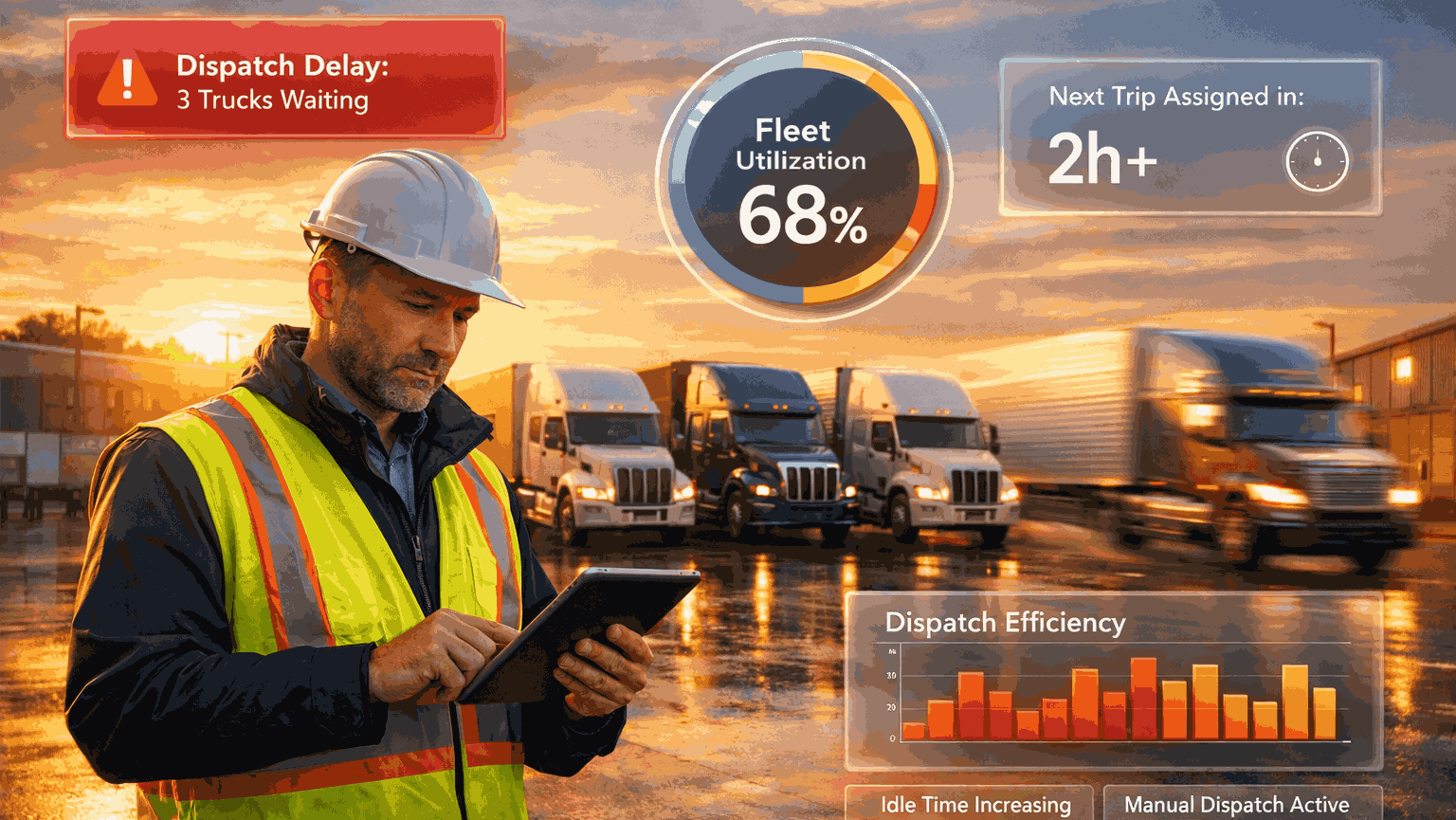
■ Key Takeaways
| ● | Dispatch delays are one of the most common reasons fleets stay idle in fleet operations. |
| ● | When dispatch teams cannot quickly identify available vehicles, fleets remain parked between trips. |
| ● | Manual coordination through calls, spreadsheets, or messaging apps slows down trip allocation. |
| ● | Tracking fleet performance metrics and transport KPI tracking helps identify idle vehicles and dispatch inefficiencies. |
| ● | TransportSimple helps dispatch teams assign trips faster and improve fleet utilisation. |
What Are Dispatch Delays in Fleet Operations?
Dispatch delays occur when a vehicle is ready to work but the next trip is not assigned quickly. In many transport companies, fleets complete a delivery and return to the yard — however, dispatch teams may take time to assign the next load.
During this waiting period:
| ● | Vehicles remain idle |
| ● | Drivers wait for instructions |
| ● | Dispatch teams search for available vehicles |
Over time, these delays reduce fleet productivity and vehicle utilisation significantly.
⚠ Important Insight
Dispatch delays are rarely caused by vehicle problems. They usually happen because dispatch teams lack real-time visibility into fleet availability. For companies trying to improve fleet performance, dispatch delays are often one of the most overlooked operational problems.
The Real Problem: Fleets Are Ready but Waiting
Many fleet managers assume fleets stay idle because of maintenance issues. But in many cases, vehicles remain parked simply because the next trip has not been assigned yet.
📦 Example Scenario
A fleet vehicle completes a delivery and returns to the yard. The vehicle is fully operational and ready for the next job. However:
| › | Dispatch teams are unaware that the vehicle is available |
| › | Trip planning is still happening manually |
| › | Drivers must wait for instructions |
As a result, the vehicle may remain idle for hours before receiving the next assignment. This gap between trip completion and next trip allocation creates unnecessary downtime.
Why Dispatch Delays Happen in Most Fleets
Dispatch delays are usually caused by operational inefficiencies. Here are the four most common root causes.
|
👁 No Real-Time Fleet Visibility Dispatch teams cannot immediately see which vehicles have finished trips and are ready. They spend time on calls finding out what should already be visible on a screen. |
📋 Manual Dispatch Planning Fleets relying on phone calls, spreadsheets, and messaging apps slow down every decision. Time is spent collecting information instead of assigning trips. |
|
👥 Poor Team Coordination Fleet operations involve dispatch, drivers, and operations managers. When communication between these teams is slow or fragmented, dispatch delays grow. |
📈 No KPI Tracking Without tracking idle time, dispatch efficiency, or trip turnaround, inefficiencies remain hidden. Problems that aren’t measured never get fixed. |
How Dispatch Delays Reduce Fleet Productivity
Dispatch delays affect fleet efficiency in three key ways.
|
🚌 Idle Vehicles Increase Vehicles that should be running trips are simply parked, dropping fleet productivity and earning nothing. |
⏳ Longer Turnaround When delays grow, turnaround time increases — reducing the number of trips a vehicle can complete in a day. |
📉 Utilisation Drops Without fleet analytics dashboards, managers cannot detect which vehicles are chronically underused. |
Key KPIs That Reveal Dispatch Delays
Fleet managers cannot reduce dispatch delays without tracking operational metrics. Here are the four most important KPIs to monitor.
|
|
|
|
Dispatch KPI Summary
|
Dispatch KPI |
What It Measures |
Why It Matters |
| Dispatch Efficiency Rate | Percentage of trips assigned without delay | Shows how efficiently dispatch teams allocate vehicles |
| Vehicle Utilisation Rate | Active time vs. total available time | Higher utilisation means fewer idle fleet vehicles |
| Trip Turnaround Time | Time between trip completion and next assignment | Long gaps signal hidden dispatch bottlenecks |
| Idle Time per Vehicle | Duration vehicles remain parked between trips | Directly reveals under-utilised fleet assets |
Frequently Asked Questions
Why do fleets stay idle in fleet operations?
Fleets often remain idle because dispatch teams cannot quickly identify available vehicles or assign new trips. Manual coordination and lack of operational visibility increase waiting time between trip completion and the next assignment.
How can fleets reduce dispatch delays?
Fleets can reduce dispatch delays by improving fleet visibility, using fleet analytics dashboards, tracking fleet performance metrics consistently, and using fleet reporting software to surface dispatch insights in real time.
Why is dispatch efficiency important?
Dispatch efficiency ensures fleets spend more time running trips and less time waiting. Higher efficiency directly improves fleet productivity, vehicle utilisation, and overall operational performance — which ultimately means more revenue per vehicle per day.
Final Thoughts
Dispatch delays are a silent drain on fleet performance. Vehicles sit idle, drivers wait, and revenue opportunities disappear — not because of breakdowns, but because of visibility gaps in the dispatch process.
The fix doesn’t require a fleet overhaul. It requires knowing which vehicles are available, in real time, and having a system that turns that information into faster trip assignments.
TransportSimple gives dispatch teams real-time vehicle status, trip tracking, and fleet analytics dashboards — so every available vehicle gets assigned faster. Book a demo to see it in action.
🚙 About This Page
This page is created by the TransportSimple team. The insights shared here come from real conversations with fleet owners, transport managers, and drivers who deal with daily operational challenges. Over time, we’ve spoken with 100+ fleet owners across different countries and fleet sizes — and one thing is consistent: what gets measured gets managed.
These blogs are written by observing real-world patterns: where fleets lose hours, where costs rise silently, and how disciplined operations build consistency without chaos. The goal is practical thinking that works on the ground — not theory.




Leave a Reply