

Why Visibility Is a Major Challenge in Fleet Operations
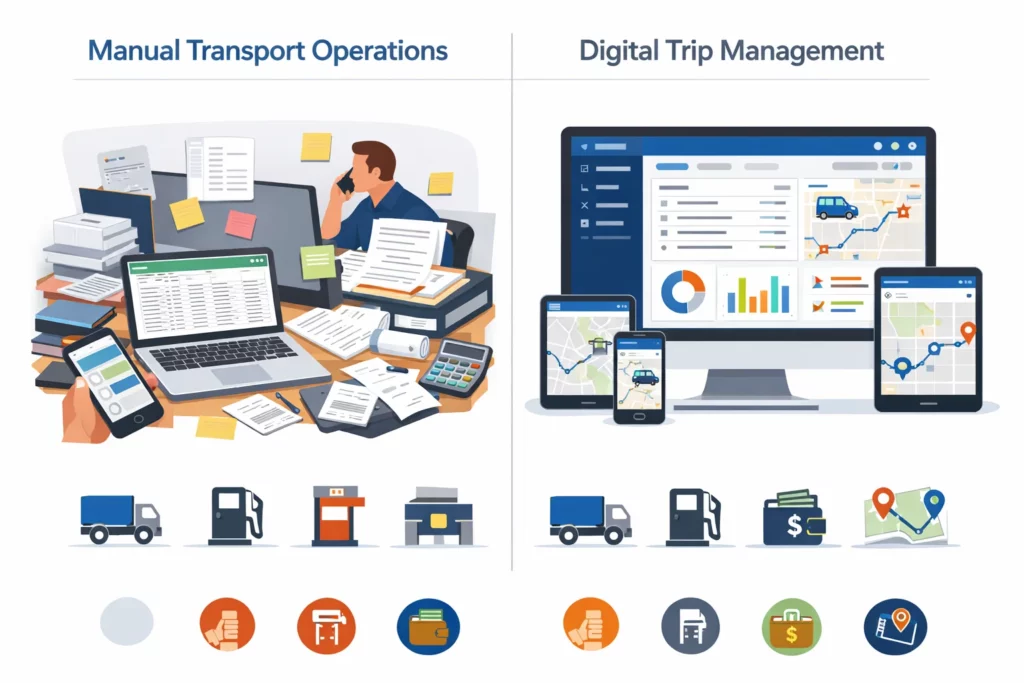
Running a transport business is not simple.
Every day trucks are moving, drivers are calling, fuel bills are coming in, toll payments are happening, and customers want updates.
Trips keep running continuously.
But many transport companies still manage their trips using:
- Paper registers
- Excel sheets
- whatsApp updates
- Driver phone calls
This may work when the fleet is small.
But once operations grow to 20, 50, or even 100 vehicles, things become difficult to track.
Trips happen.
Money comes.
Money goes.
But many transport owners still struggle to answer one important question:
Is every trip actually making profit?
This is where structured transport trip management becomes essential.
The Real Problem: No Visibility Inside Each Trip
Most transport companies don’t fail because they lack business.
They struggle because they cannot clearly see what is happening inside each trip.
For example, imagine a truck traveling from Dubai to Abu Dhabi.
You know the freight amount charged to the customer.
But do you know the total cost of that trip?
Operational expenses often include:
- diesel or fuel consumption
- toll payments across highways
- driver allowances and advances
- loading and unloading charges
- unexpected repair costs
Without proper route expense tracking, these expenses remain scattered across different records.
As a result, trips may look profitable on paper, but hidden costs slowly reduce margins.
Without visibility, it becomes difficult to understand route profitability or improve operations.

Understanding Fleet Trip Management
Fleet trip management is a key feature of a fleet management system or modern fleet management software.
It helps fleet companies organize the entire lifecycle of a trip from planning and dispatch to completion and financial settlement.
Instead of relying on scattered records, all trip information is stored in one system.
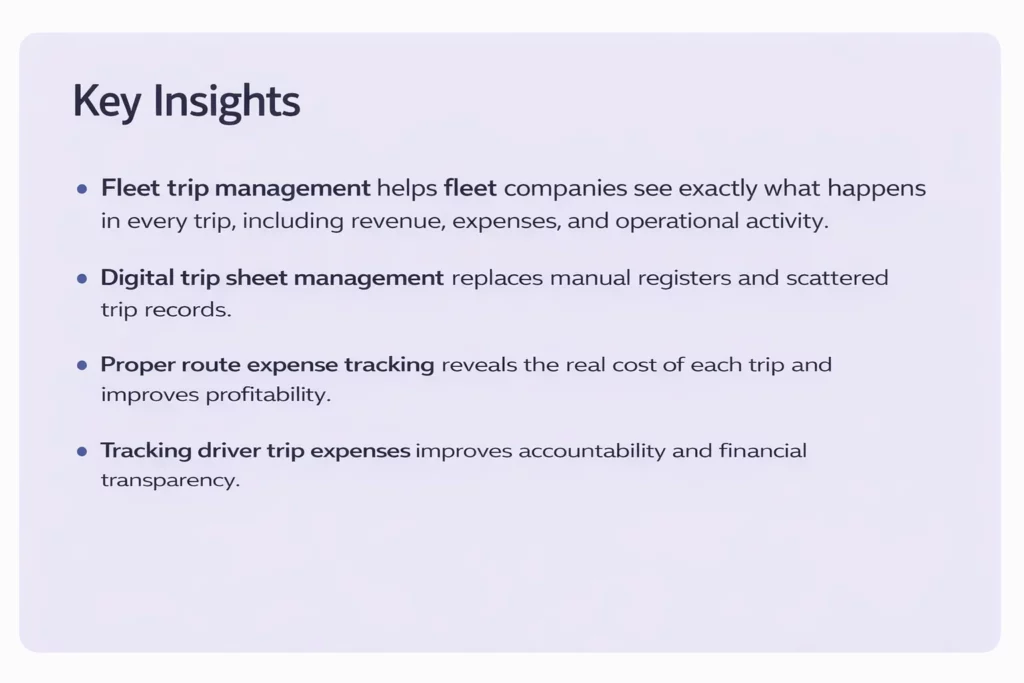
A structured fleet trip management platform allows companies to:
- create digital trip sheets
- assign vehicles and drivers
- track trip progress
- record route expenses
- capture driver trip expenses
- manage freight job settlement
- generate transport job billing
This structured approach replaces manual processes with organized trip sheet management, making operations easier to control.
Digital Trip Sheet Management Improves Operational Visibility
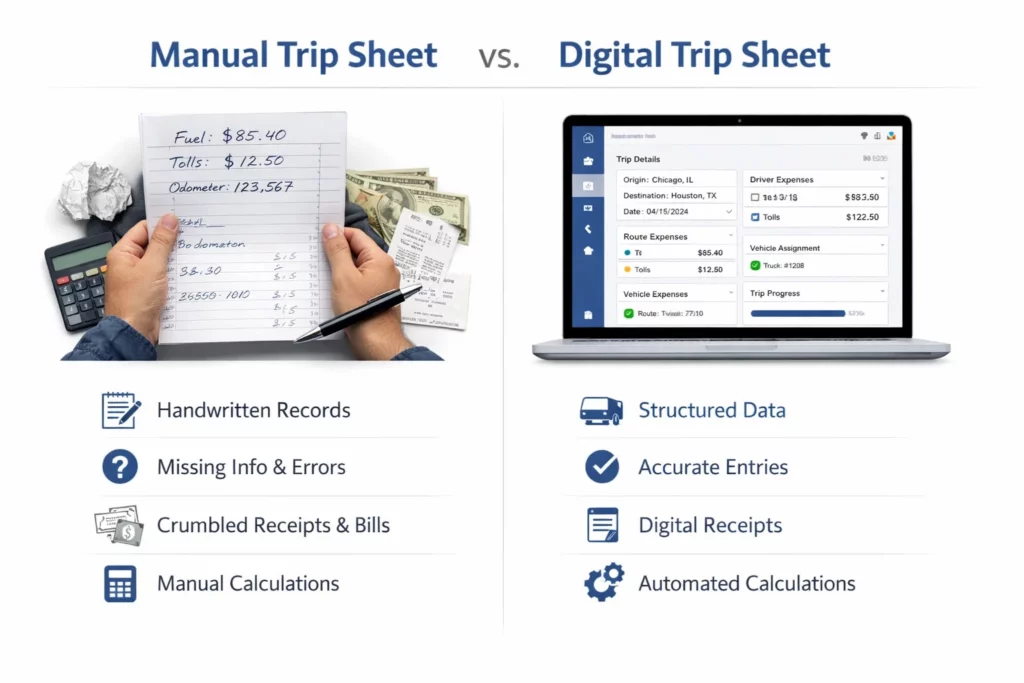
Many fleet companies still maintain manual trip sheets.
Drivers write expenses during the trip.
Later someone enters the information into Excel.
This process creates several problems. Common issues include:
- missing driver trip expenses
- delayed trip sheet updates
- incorrect calculations
- lost receipts or documents
- slow transport job billing
Digital trip sheet management solves these issues.
All trip details are stored in one place.
Fleet managers can instantly see:
- trips currently in progress
- upcoming scheduled trips
- completed deliveries
- delayed shipments
- vehicle availability
Instead of chasing information through calls or spreadsheets, operations teams can monitor everything from a single fleet management system dashboard.
Route Expense Tracking Reveals the True Cost of Trips
Many transport companies know how much revenue each trip generates.
But they often struggle to calculate the true cost of that trip.
Operational costs can include:
- fuel purchases during the journey
- toll payments across routes
- driver allowances and reimbursements
- emergency repair expenses
- loading and unloading charges
Without structured route expense tracking, these costs are not always connected to the trip.
Transport trip management systems allow every expense to be recorded directly within the trip sheet.
When revenue and expenses are linked together, fleet managers gain clear insight into trip- level profitability and job costing.
A structured job costing system helps transport companies understand exactly how much each trip actually costs.
This visibility helps companies identify:
- profitable routes
- expensive trips
- opportunities to reduce operational costs
Tracking Driver Trip Expenses Improves Accountability
Drivers manage many operational expenses during a trip.
They handle fuel purchases, toll payments, and other operational costs along the route.
When these costs are tracked manually, transparency becomes difficult.
Trip management systems solve this by recording driver trip expenses directly within the trip sheet.
Operations teams can track:
- driver advances issued before trips
- expenses incurred during transport
- fuel purchases and toll payments
- delivery confirmations and documents
This improves accountability and reduces financial confusion.
Trip Data Enables Better Fleet Analytics
When trips are managed digitally, transport companies gain valuable operational data.
This data can be analyzed through fleet analytics dashboards and fleet reporting software.
Fleet managers can identify trends such as:
- vehicle utilization patterns
- recurring operational costs
- driver performance insights
- route efficiency trends
These insights turn trip data into actionable fleet analytics, helping transport companies reduce operational costs and improve profitability.
Instead of relying on guesswork, fleet owners can make smarter decisions based on real operational data.
Faster Freight Job Settlement and FleetJob Billing
Billing delays are a common challenge in fleet companies.
When trip records, delivery confirmations, and expense reports are scattered across different systems, invoicing becomes slow.
Transport trip management systems simplify this process.
Once a trip is completed, the system already contains:
- freight revenue
- route expenses
- driver costs
This allows companies to quickly process:
- freight job settlement
- fleet job billing
- invoice generation for customers
Faster billing improves cash flow and reduces financial errors.
Why Transport Companies Are Moving Toward Digital Trip Management
The fleet industry is becoming increasingly competitive.
Fuel prices fluctuate.
Operational costs continue to rise.
Customers expect faster and more reliable service.
Manual systems struggle to keep up with these challenges.
Digital platforms like TransportSimple help transport companies bring structure to their fleet operations.
TransportSimple is built specifically for transporters and fleet owners.
It connects trip planning, trip sheet management, route expense tracking, driver expense
tracking, and fleet job billing in one platform.
Instead of managing operations across multiple tools, everything is organized in one structured system.
The Outcome: More Control and Better Profitability
When transport companies adopt structured fleet trip management, daily operations become easier to manage.
Fleet owners gain:
- clear trip-level visibility
- accurate route expense tracking
- improved driver accountability
- faster freight job settlement
- better route profitability insights
Trips become organized.
Expenses become visible.
Drivers become accountable.
And most importantly, profit becomes measurable.
Final Thoughts
Fleet businesses don’t struggle because they lack trips. Most of the time, they struggle because they lack visibility into what happens inside each trip.
When trip details are scattered across registers, calls, and spreadsheets, it becomes difficult to track expenses, control costs, and understand real profitability.
Structured transport trip management solves this problem by bringing clarity to daily operations. When trip sheets, route expenses, driver costs, and billing are managed in one system, transport companies gain the visibility needed to run their fleets more efficiently.
Platforms like TransportSimple help transporters organize trips, track driver expenses, manage route costs, and handle freight job settlement from a single platform. Instead of relying on guesswork, fleet owners can make decisions based on real operational data.
When trips are structured and data is visible, transport businesses gain something very valuable control over operations and confidence in their profitability.


Leave a Reply