
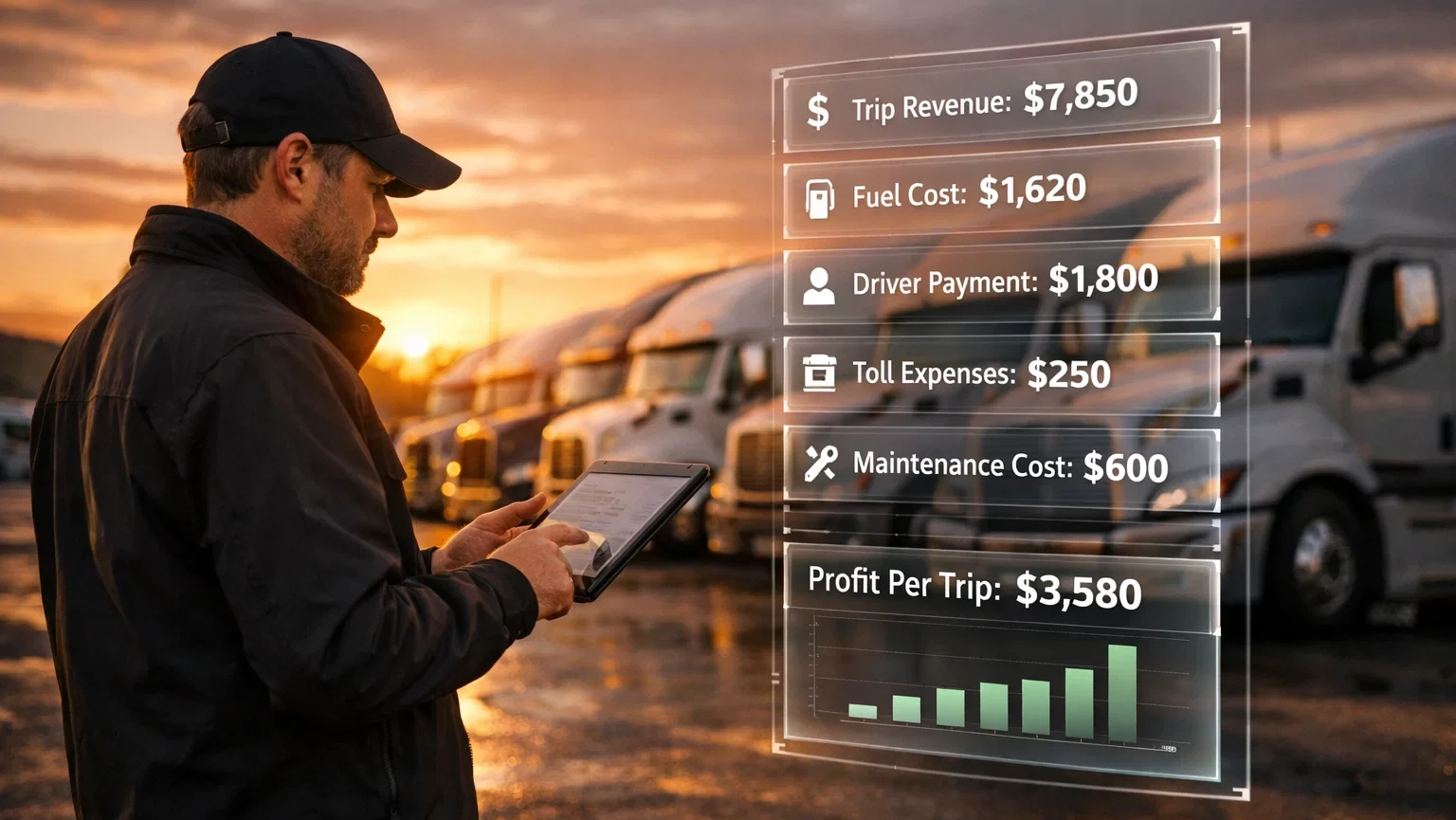
Fleet companies rarely fail because they lack trips.
They struggle because job-level profitability is not clearly measured.
Revenue grows.
Trips increase.
Fleet size expands.
But profit per trip slowly reduces.
This happens when fleet profitability tracking is missing or incomplete.
Without structured job profitability software, small inefficiencies compound over time.
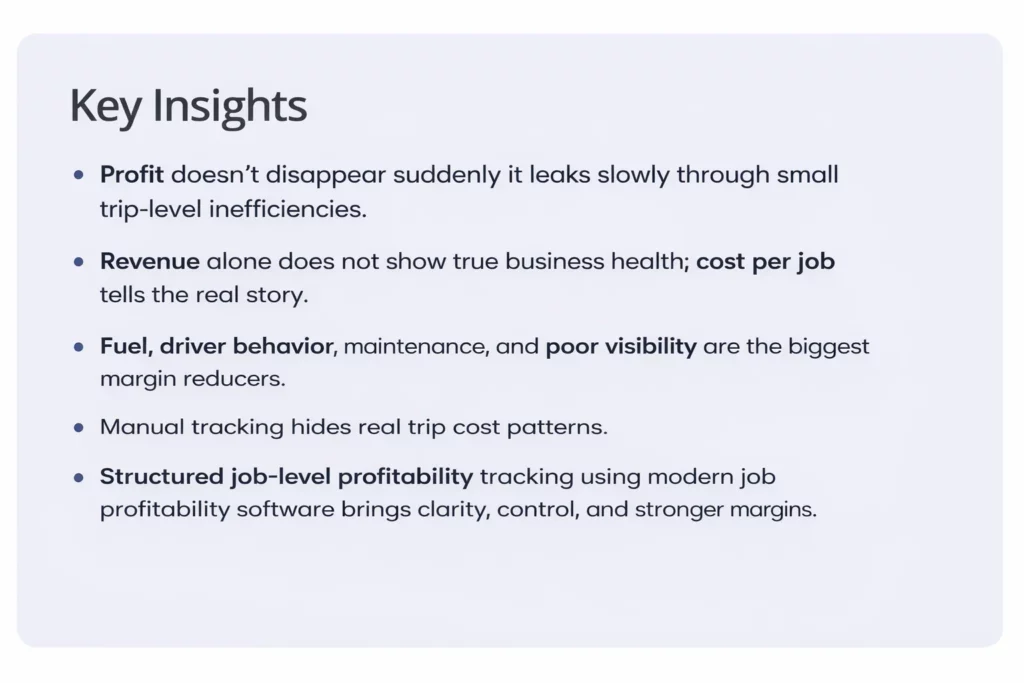
Why Profit Leakage Happens Quietly
Fleet costs rarely show up as one big problem.
They spread across operations.
Revenue is clear.
Costs are fragmented.
Fuel tracked separately from billing.
Driver commission calculated at month-end.
Maintenance recorded without job linkage.
Toll expenses added manually.
Without proper transport job costing inside a connected fleet management software, the real cost per job stays hidden.
And when the real cost per job is unclear, the fleet P&L report becomes inaccurate.
Revenue Growth Is Not Profit Growth
Billing growth creates confidence.
But billing does not equal job-level profitability.
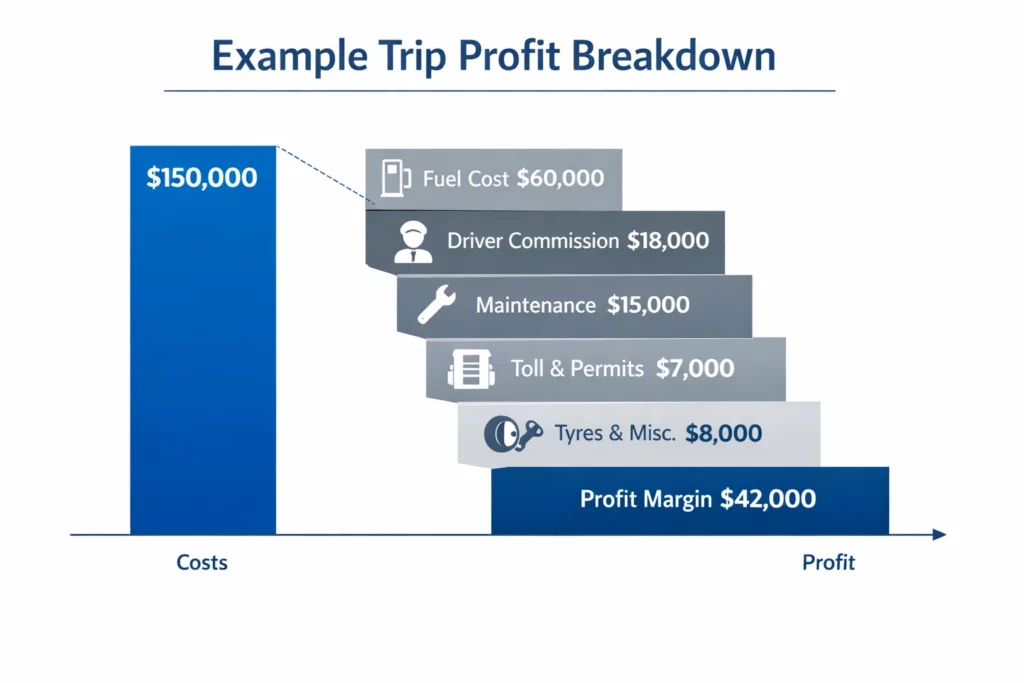
Example:
Trip revenue: 150,000
Trip cost breakdown:
Fuel cost per trip: 60,000
Driver commission: 18,000
Maintenance allocation: 15,000
Toll & permits: 7,000
Tyre & misc: 8,000
Without structured trip sheet management and a reliable cost per km calculator, these numbers remain disconnected.
Profit looks strong.
Actual margin may be weak.
Over time, this impacts:
- Cash flow
- Expansion
- Vehicle lifecycle decisions
- Financial stability
This is why consistent fleet profitability tracking is critical.
The Real Cost Structure Behind Every Trip
Transport cost is layered.
Some costs are obvious.
Others are hidden within daily operations.
Both impact real profit per trip.
Direct Costs
Fuel Expenses
Without a strong fuel management system and cost per km calculator, fuel inefficiencies reduce margins silently.
Driver Payments
Driver commission automation ensures payouts align with job-level profitability.
Maintenance and Repairs
Fleet maintenance software that supports preventive maintenance reduces emergency downtime and improves cost control.
Depreciation
Vehicle lifecycle management impacts long-term fleet P&L reporting.
Hidden Costs
This is where structured job profitability software makes the biggest difference.
Operational Inefficiencies
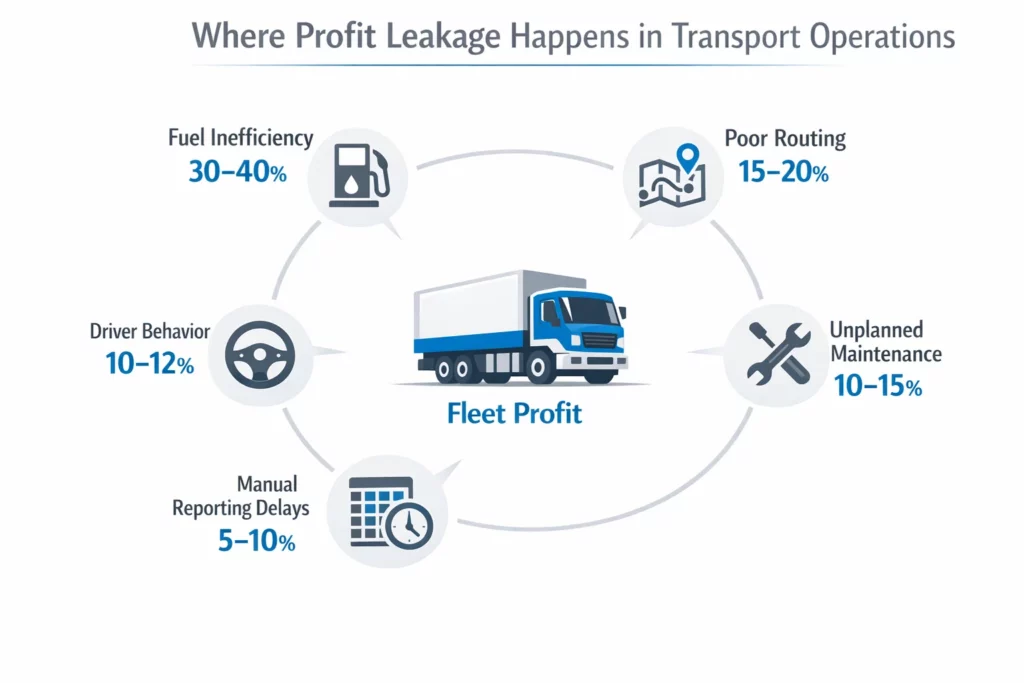
- Poor routing
- Idle vehicles
- Underutilised assets
- Delayed job assignment
Without route expense tracking and fleet operational cost tracking, inefficiencies remain invisible.
Unplanned Downtime
Every hour off-road impacts revenue.
Preventive maintenance and digital work orders reduce this risk.
Fragmented Tracking
Disconnected transport billing systems and fleet accounting software create reporting gaps.
Without an integrated fleet management system, job-level profitability cannot be calculated accurately.
Why Manual Tracking Weakens Profit Visibility
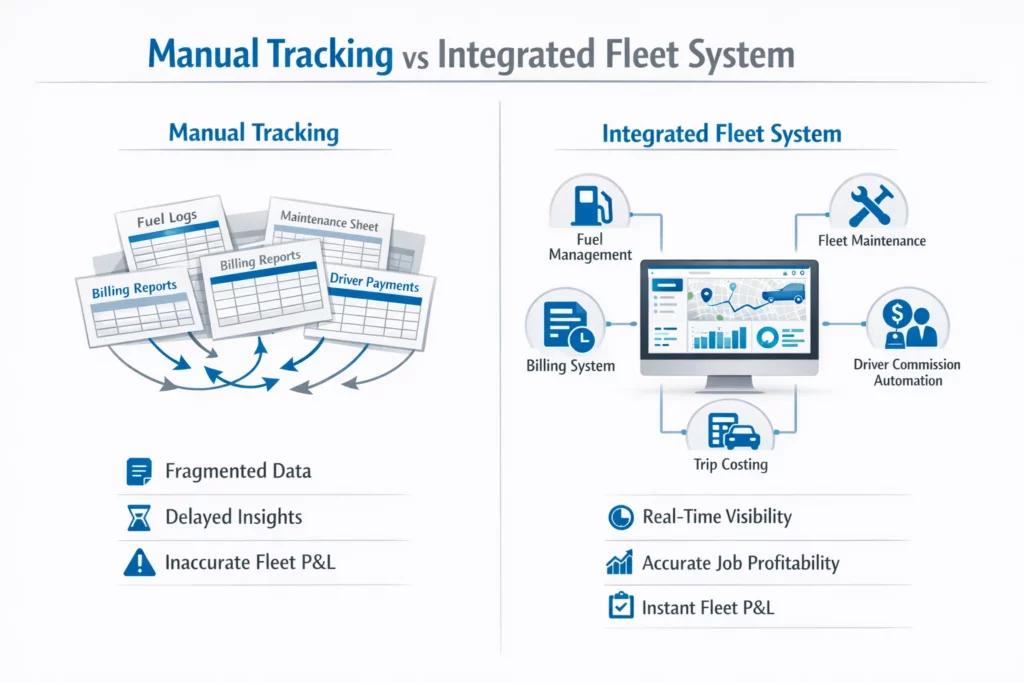
Spreadsheets create data silos.
Fuel in one sheet.
Maintenance in another.
Billing in another.
Driver commission calculated manually.
This prevents accurate fleet P&L reporting.
Manual tracking delays insight.
Delayed insight delays action.
Modern fleet management software connects operations, billing, and accounting under one system.
This strengthens transport profitability tracking significantly.
Total Trip Cost: The Number That Protects Margins
Instead of focusing only on revenue, companies must focus on total trip cost.
Total Trip Cost Includes:
- Fuel cost per trip
- Driver commission
- Maintenance allocation
- Tyre usage
- Toll charges
- Cross-hire cost
- Administrative overhead
When calculated inside structured job profitability software, real profit per trip becomes instantly visible.
This strengthens overall fleet financial management.
What Structured Job Profitability Tracking Should Deliver
A modern fleet management system should provide:
- Automated transport job costing
- Real-time job-level profitability visibility
- Accurate fleet P&L reports
- Vehicle-wise margin comparison
- Customer-wise profitability tracking
- Clear fleet analytics dashboard
- Integrated trip sheet management
When profit is visible at job level, management shifts from reactive to proactive. You can:
- Identify low-margin contracts
- Adjust pricing
- Improve route efficiency
- Strengthen fleet cost reduction
- Monitor driver performance
Clarity leads to control.
Control strengthens profitability.
How Integrated Fleet Systems Improve Margins
A connected fleet management software integrates:
- Fuel management system
- Fleet maintenance software
- Transport billing system
- Driver commission automation
- Fleet operational cost tracking
- Transport accounting software
This integration improves:
- Accuracy
- Speed of decision-making
- Financial transparency
Instead of combining reports manually, management views a clear fleet P&L report instantly. This improves overall fleet profitability tracking.
From Revenue Focus to Profit Discipline
Many fleet companies measure growth by trips and billing. Sustainable companies measure growth by job-level profitability. When structured job profitability software supports daily operations:
- Margins stabilize
- Cost per km improves
- Downtime reduces
- Pricing decisions strengthen
- Financial discipline increases
Structured tracking is not about more reports.
It is about better decisions.
When every trip’s cost is visible, profit becomes measurable and manageable.
About This Page
This page is created by the TransportSimple team.
The insights shared here come from real conversations with fleet owners, transport managers, and operations teams who deal with daily cost pressures, tight margins, and constant operational decisions. Over time, we’ve spoken with 100+ fleet owners across different countries and fleet sizes, and one thing is consistent—profitability becomes difficult when structure is missing.
These blogs are written by observing real-world patterns: where margins slowly reduce, where hidden trip costs go unnoticed, and how disciplined fleets build clarity without adding operational chaos. The goal is not to provide theory, but to share practical thinking that works on the ground.
This same learning process shapes how TransportSimple is built by listening closely to fleet teams and supporting better job-level profitability control without increasing complexity.
At the end of the day, these blogs are written with a clear purpose: to help fleet owners reduce uncertainty, improve financial visibility, and build operations that are stable, organised, and easier to manage—by understanding true profit per trip before it affects long-term business health.


Leave a Reply