In the management of a fleet, whether it’s vehicles or other mobile assets, having a clear understanding and visibility is key to achieving success. Success indicators can vary significantly across different fleets, each employing a variety of metrics. This document will explore crucial metrics that are essential for fleet monitoring, highlighting the role of fleet…
In the management of a fleet, whether it’s vehicles or other mobile assets, having a clear understanding and visibility is key to achieving success. Success indicators can vary significantly across different fleets, each employing a variety of metrics. This document will explore crucial metrics that are essential for fleet monitoring, highlighting the role of fleet maintenance software in this process.
This ebook provides comprehensive insights into vital metrics crucial for the success of fleet management. It covers a range of topics, from asset availability and utilization to preventive maintenance, breakdown costs, and the balance between labor and parts costs. Additionally, it delves into the significance of inventory turnover and offers context-specific strategies for efficient fleet management. These insights are derived from the expertise of Dr. James T. Burnham, a renowned specialist in the field.
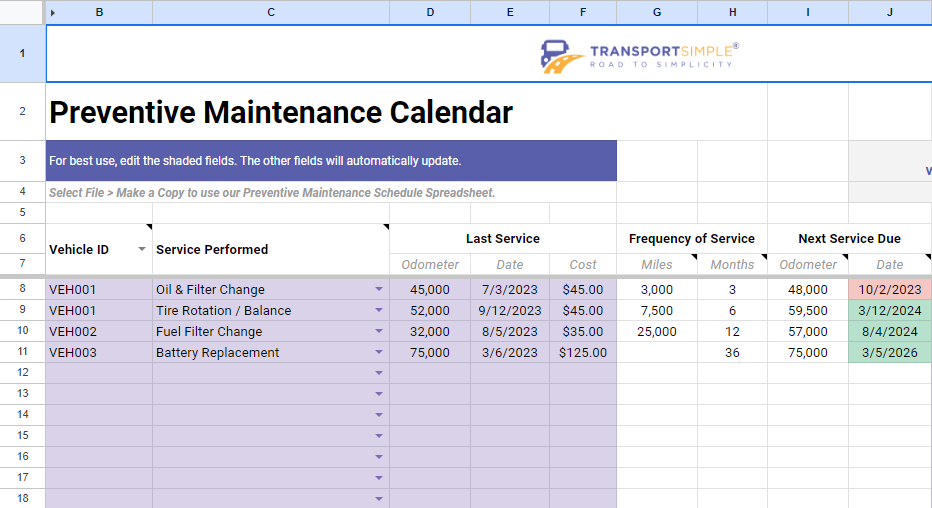
Understanding the importance of regular vehicle maintenance is key to avoiding costly repairs and ensuring uninterrupted operations. Our free Preventive Maintenance (PM) Schedule template is your solution to effectively manage service routines for your fleet. This tool is streamlined for tracking essential service tasks – from oil changes to tire rotations. It’s designed to help…
Understanding the importance of regular vehicle maintenance is key to avoiding costly repairs and ensuring uninterrupted operations. Our free Preventive Maintenance (PM) Schedule template is your solution to effectively manage service routines for your fleet.
This tool is streamlined for tracking essential service tasks – from oil changes to tire rotations. It’s designed to help you proactively plan and stay ahead of maintenance needs, ensuring each vehicle in your fleet operates at its best.
With user-friendly features, you can effortlessly generate individual vehicle reports, simplifying maintenance oversight. Ideal for fleets of any size, this template is a must-have for maintaining optimal vehicle health and operational efficiency. Get ahead of maintenance challenges with our easy-to-use, comprehensive PM Schedule template.
Our PM schedule template is specifically crafted to assist you in creating a tailored preventive maintenance calendar, enabling you to efficiently track routine service tasks for your fleet.
To create a personalized, editable version of this preventive maintenance template in Google Sheets, follow these steps:
Access the Template: Click on the provided link to open the preventive maintenance template in Google Sheets.
Navigate to the ‘File’ Menu: Once the template is open, go to the ‘File’ menu located in the upper-left corner of the screen.
Select ‘Make a Copy’: In the ‘File’ menu, choose the ‘Make a copy’ option. This action will create an editable version of the template for your use.
Name Your Document: A dialogue box will appear, prompting you to name your new document.
Save and Customize: After naming, save the document. You can now begin customizing the spreadsheet to suit your specific preventive maintenance scheduling needs.
Maintenance Task Checklist: Compile a list of routine maintenance tasks specific to your fleet, forming a comprehensive checklist for future servicing.
Tailored Service Intervals: Set customized intervals for service based on mileage or time, aiding in the planning of upcoming maintenance activities.
Maintenance History Log: Maintain a straightforward log for tracking all completed maintenance, ensuring easy access to historical data.
Vehicle-Specific Maintenance Overview: Generate immediate reports for each vehicle in your fleet, providing a clear view of their maintenance history and upcoming requirements.
Preventive Maintenance with TransportSimple
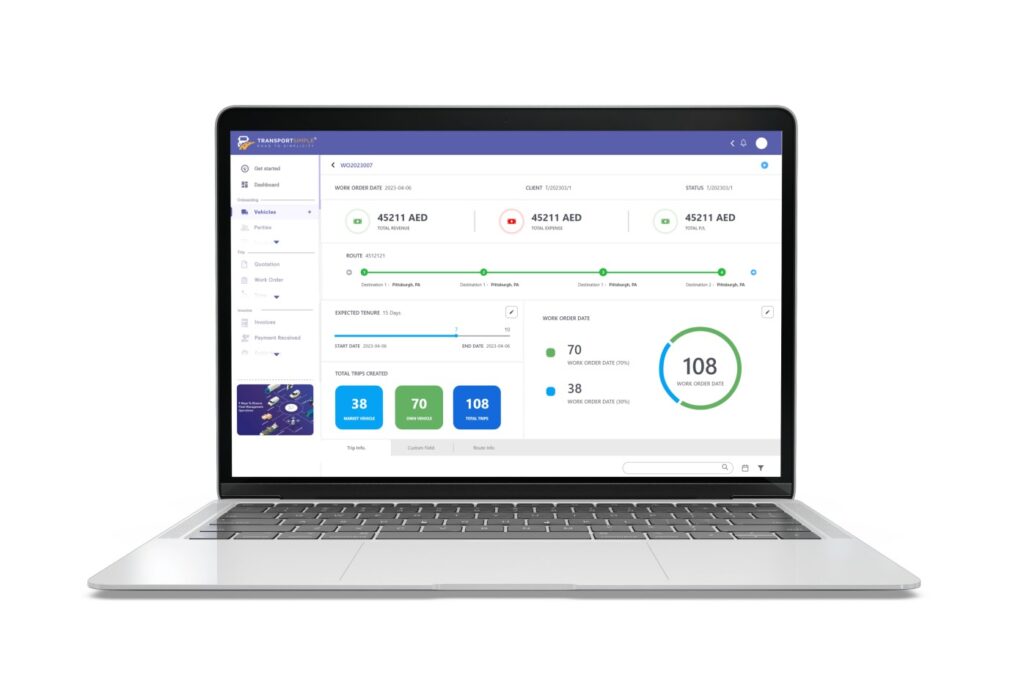
If you’re finding it difficult to keep up with preventive maintenance using traditional spreadsheets and paper, TransportSimple offers a streamlined solution. This maintenance management software automates your fleet’s maintenance schedule, promptly alerting you to upcoming service requirements. With
TransportSimple, initiating maintenance is quick and efficient, reducing downtime costs for your fleet. Plus, easy access to each vehicle’s service history and expenses helps you evaluate the cost-effectiveness of your assets. TransportSimple’s enhanced visibility feature makes it an ideal choice for effective fleet maintenance management.
The importance of conducting thorough pre-trip inspections for heavy-duty vehicles in the transportation and logistics industry cannot be overstated. Regular inspections are crucial for ensuring the safety of the vehicle, the driver, and other road users. Moreover, they play a significant role in maintaining operational efficiency and preventing costly downtime. Without a comprehensive and driver-friendly…
The importance of conducting thorough pre-trip inspections for heavy-duty vehicles in the transportation and logistics industry cannot be overstated. Regular inspections are crucial for ensuring the safety of the vehicle, the driver, and other road users. Moreover, they play a significant role in maintaining operational efficiency and preventing costly downtime. Without a comprehensive and driver-friendly inspection form, valuable fleet data could be overlooked daily, impacting both safety and performance.
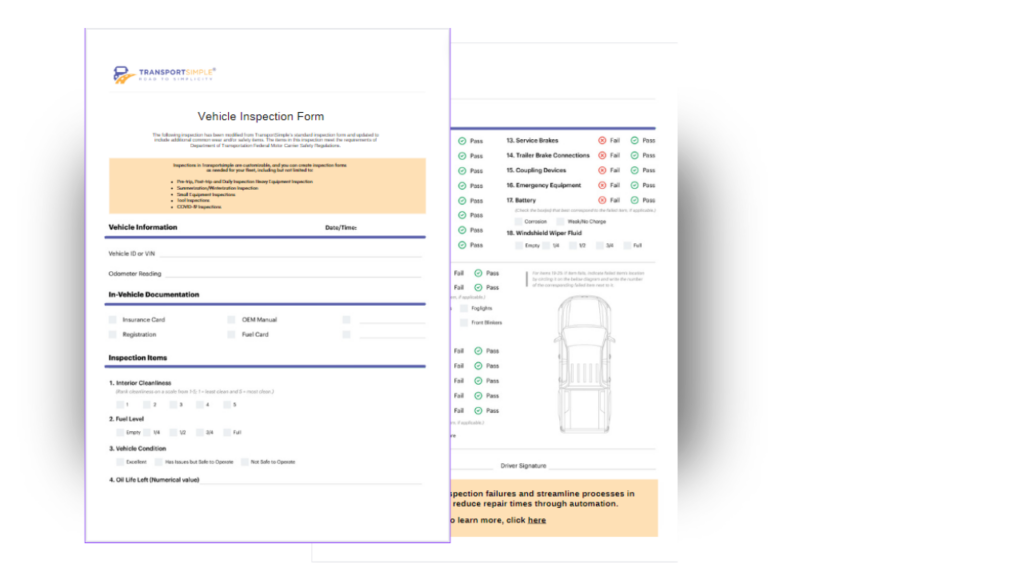
To address this need, we offer a free vehicle inspection tool designed specifically for the rigorous demands of heavy-duty transportation. Our inspection form template guides drivers through a detailed check of their vehicle before each trip. This not only ensures a consistent and thorough inspection process but also creates a historical record of each vehicle’s condition over time. With this tool, drivers know exactly what to look for, enhancing safety standards and contributing to the smooth operation of your fleet.
When carrying out a pre-trip inspection, use a comprehensive checklist to examine the vehicle thoroughly. Your checklist should include:
General Vehicle Information: Record the odometer reading, date, and time of the inspection.
Interior Checks: Verify the functionality of the horn and brakes, and ensure all necessary documentation is present.
Exterior Inspections: Check the condition of lights, tires, and the vehicle body for any damages or issues.
Mechanical Components: Assess the oil level, and battery condition, and listen for any unusual sounds that may indicate mechanical problems.
This detailed approach helps in identifying potential issues early, allowing for timely maintenance and preventing future part failures.
How to use the Vehicle Inspection Form?
To use our vehicle inspection form effectively, follow these simple steps:
Download the Form: Get the PDF of our vehicle inspection form, featuring pre-filled items for checking.
Review the Format: The form is designed in a pass/fail layout for easy and quick usage.
Compliance Check: Inspect the Items on the form to meet the required inspection regulations.
Printing: Print out the form as needed for regular use.
Notepad Option: Consider creating a notepad from the form for consistent fleet-wide use.
Distribute to Operators: Ensure operators have access to the form for standardized vehicle inspections.
Why is the Vehicle Inspection Form useful?
Vehicle inspection forms are useful for several reasons:
Ensures Compliance: Helps in meeting regulatory requirements, such as those set by the DOT and FMCSA.
Standardizes Inspections: Creates a uniform approach to vehicle inspections across the fleet.
Improves Safety: Identifies potential safety issues before vehicles hit the road, reducing the risk of accidents.
Prevents Breakdowns: Early detection of mechanical problems can prevent breakdowns and costly repairs.
Maintains Vehicle Health: Regular checks contribute to the overall longevity and efficiency of the vehicle.
Streamlines Record-Keeping: Provides a clear and organized way to keep track of vehicle conditions and maintenance history.
Enhances Accountability: Holds operators responsible for checking and reporting the condition of their vehicles.
Facilitates Quick Decision Making: Easy-to-understand pass/fail format allows for quick assessments and decisions regarding vehicle fitness.
Vehicle Inspection with TransportSimple
If manually converting driver inspections into work orders is becoming a hassle, consider automating your fleet’s maintenance process with TransportSimple. This fleet maintenance software includes a driver’s app that streamlines pre-trip inspections. Whenever an inspection item fails, you’ll receive an instant notification in your email. This prompt alert system enables you to swiftly create a work order and initiate the maintenance process, ensuring timely and efficient fleet management.
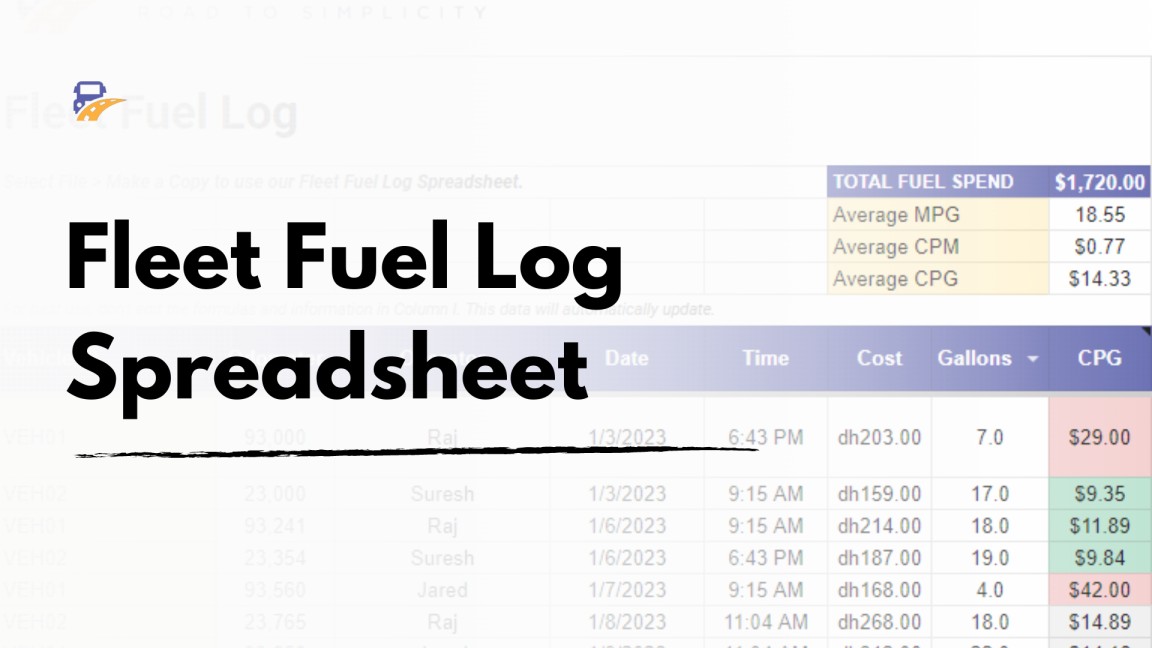
Control what you can in the world of fluctuating fuel costs. Key to reducing your fleet’s fuel expenses is identifying high-consumption vehicles and spotting irregularities, including potential fuel theft. A customizable fuel log tool can be your ally, offering a clear and simple way to track and analyze your fleet’s fuel usage. Embrace this smart…
Control what you can in the world of fluctuating fuel costs. Key to reducing your fleet’s fuel expenses is identifying high-consumption vehicles and spotting irregularities, including potential fuel theft. A customizable fuel log tool can be your ally, offering a clear and simple way to track and analyze your fleet’s fuel usage. Embrace this smart approach to turn data into actionable insights, leading to a more efficient and cost-effective Fleet fuel management.
To effectively track your fleet’s fuel expenses, consider leveraging a combination of methods for comprehensive data capture and analysis. Here are some key strategies to make the process easier for you:
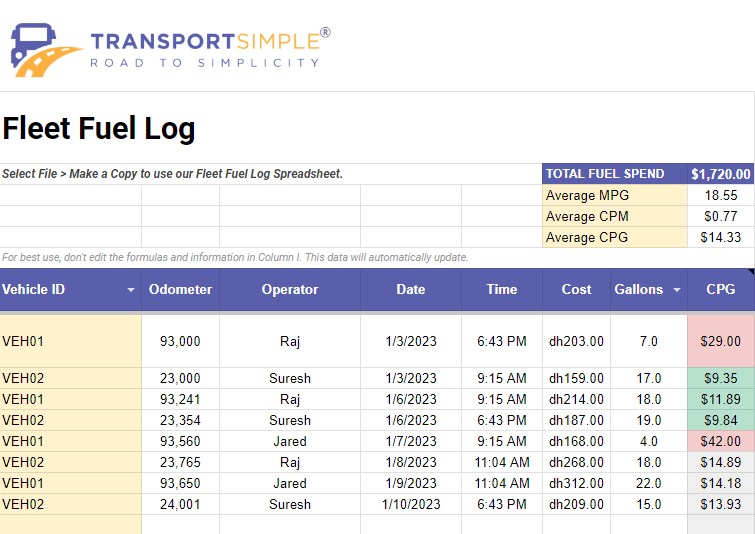
Fuel Log Spreadsheet: Use a customizable spreadsheet to record fuel transactions for each vehicle. It’s user-friendly and great for comparing data over time, helping you spot usage patterns and potential savings.
Fuel Management Software: This advanced option automates data collection and provides detailed analysis. It’s efficient for monitoring real-time fuel usage across your fleet and identifying cost-saving opportunities.
Paper Forms and Receipts: Keep physical copies of fuel receipts and paper logs as a reliable backup. They’re useful for cross-checking and auditing your digital records.
Regular Data Review: Consistently analyze your fuel data. This helps in understanding how fuel is used within your fleet and in pinpointing inefficiencies or unusual patterns.
Data Integration: Combine information from different tracking methods for a comprehensive overview. This integrated approach leads to more accurate management decisions.
How to use the Fleet Fuel Log Spreadsheet ?
This fuel log spreadsheet is designed to make it easy for you to compare important details for each vehicle with the average for your whole fleet. You can look at things like how many miles you get per gallon (or kilometers per liter), how much each mile (or kilometer) costs, and the price for each gallon (or liter) of fuel.
Open the Template Link: First, click on the provided link to access the fuel log template in Google Sheets.
Go to ‘File’ Menu: Once the template is open in Google Sheets, navigate to the ‘File’ menu located at the top left corner of the screen.
Select ‘Make a Copy’: In the ‘File’ menu, find and select the option ‘Make a copy’. This will allow you to create an editable version of the template.
Name Your Document: After selecting ‘Make a copy’, a prompt will appear allowing you to name your own version of the spreadsheet.
Save and Start Editing: Once you have named it, save the copy. You can now start editing and customizing the spreadsheet to suit your fleet’s fuel tracking needs.
Track your Information
This free fuel log template allows you to monitor your fleet’s fuel consumption and expenses efficiently. Its features include:
Detailed Record of Fuel Purchases for Each Vehicle
You can easily record every fuel purchase with key details like date, time, fuel card number, vendor, and the person operating the vehicle.
Reports on Individual Vehicle Usage
Generate quick reports for any vehicle in your fleet to see total fuel usage and expenses.
Analysis of Fleet-wide Fuel Data
Assess and compare fuel costs and consumption across your entire fleet to help with decisions regarding vehicle purchases or disposals.
Alerts for Unusual Fuel Purchases
The template highlights any unusual or excessively large fuel purchases to immediately draw your attention.
Make Tracking Easier with TransportSimple
If you’re seeking an efficient alternative to the cumbersome process of using spreadsheets and paper forms for fleet management, TransportSimple presents an ideal solution. This advanced fleet fuel management system is designed to streamline your fuel data collection, offering seamless integration with fuel card purchases and a user-friendly mobile application for drivers to record transactions at the pump.
TransportSimple stands out in the market with its enhanced visibility features, providing a comprehensive platform to optimize your fleet’s fuel management. Utilise TransportSimple to uncover significant cost-saving opportunities and effectively monitor for potential fuel theft, thereby ensuring a more efficient and secure fleet operation.
DOWNLOAD YOUR FREE RESOURCE
FILL OUT THE FORM TO RECEIVE A DOWNLOAD LINK FOR YOUR FREE RESOURCE.
THANK YOU
THANK YOUR FOR DOWNLOAD, PLEASE CHECK YOUR MAIL FOR
DOWNLOAD FILE